Fieldwork

Camera & world
design panel

Industrial references and two visual treatments for a simulator that moves between fleet supervision and manual vehicle control. Use the panel to agree on which cues operators need before and during an intervention.

Two browser prototypes

Compare the same excavator camera with identical geometry and controls. The material palette, ground markings and target contrast vary together.

Faceted quarry

Faceted quarry

Varied aggregate and low-poly berms frame the bucket, rock and landing pad. The road edge and cast shadow provide persistent reference.

Diagrammatic yard

Diagrammatic yard

The same bucket and target sit against a muted ground grid and stronger pad outline.

Launch either treatment from the Bun app in the Fieldwork package. The camera stills below come from the running simulator.

Other vehicle cameras

Haul truck · forward

Haul truck · forward

Lane paint, the preceding truck and the rock face give direction and motion cues.

Gantry crane · oblique

Gantry crane · oblique

The spreader, load and outlined placement bay share one line of sight beneath the girder.

Snowplow · forward

Snowplow · forward

A blade edge stays in view while the centerline and synthetic snow patches establish direction.

From fleet to asset

Which information should stay visible while a single vehicle occupies the operator’s hands and most of their attention?

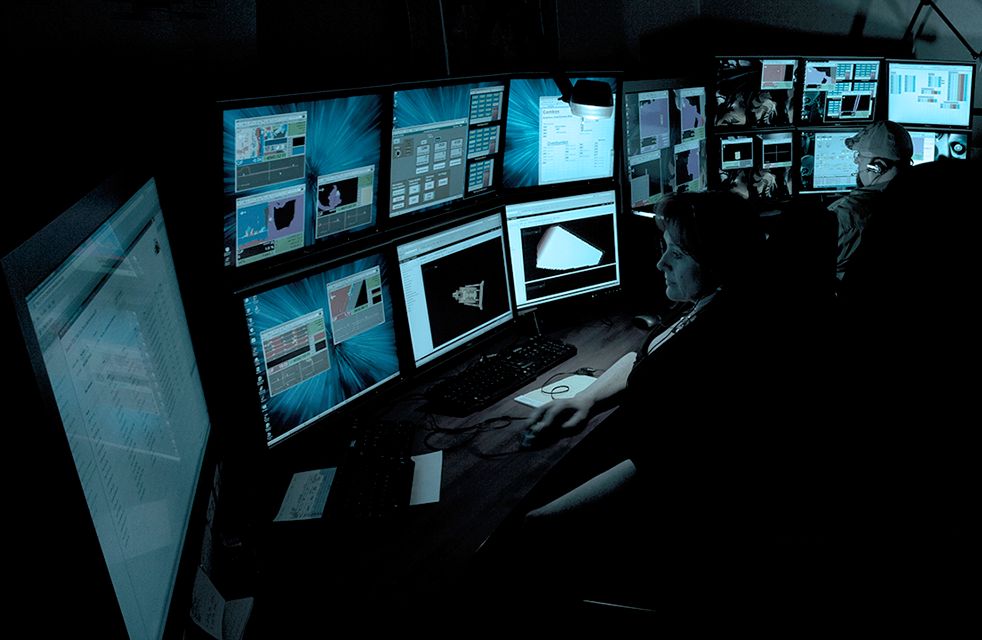
MineStar Command control room

Use the room for a discussion about persistent site context at a shared display and what belongs at a seat.

Caterpillar

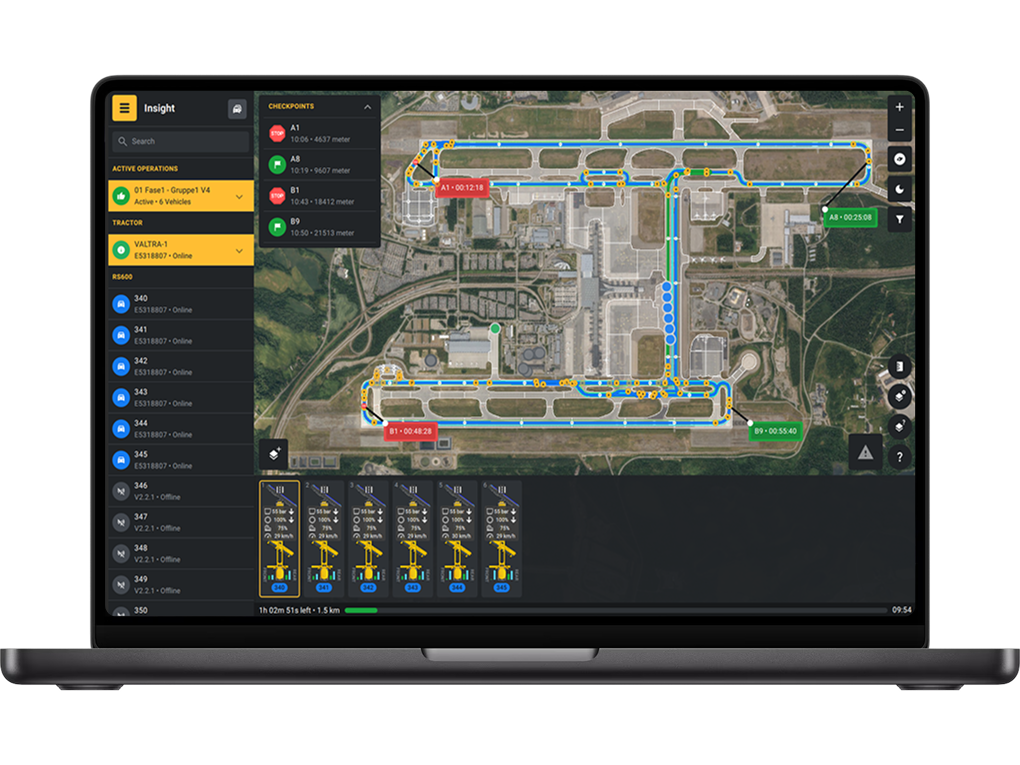
Airport winter operations overview

A site map, areas, and work status provide a counterpoint to a vehicle inventory as the starting screen.

Yeti Move

From asset to contact

Find the reference for distance or alignment in each image. If the primary view loses it, what single alternate view would resolve the uncertainty?

Cat Command virtual cab

This working station combines site context, close machine views, physical controls and separate machine instrumentation.

Caterpillar

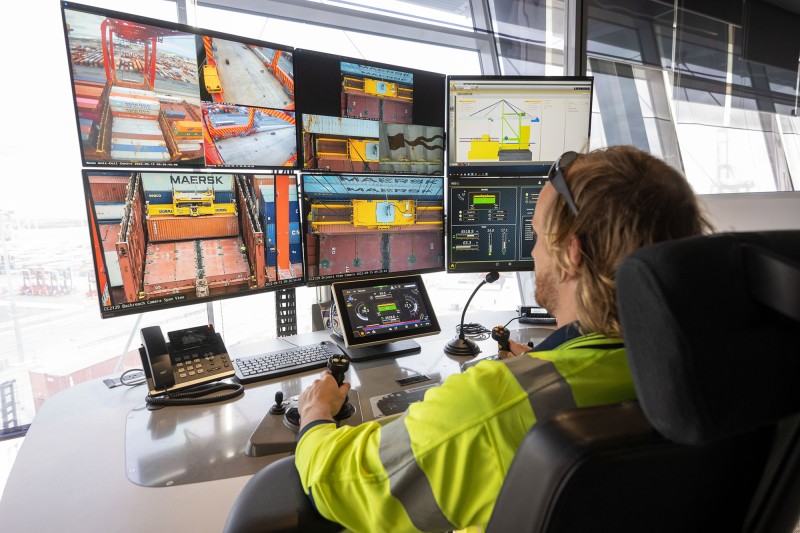
Brisbane remote crane station

Compare the joystick station and the crane's complementary camera angles during a pick or place exception.

Liebherr

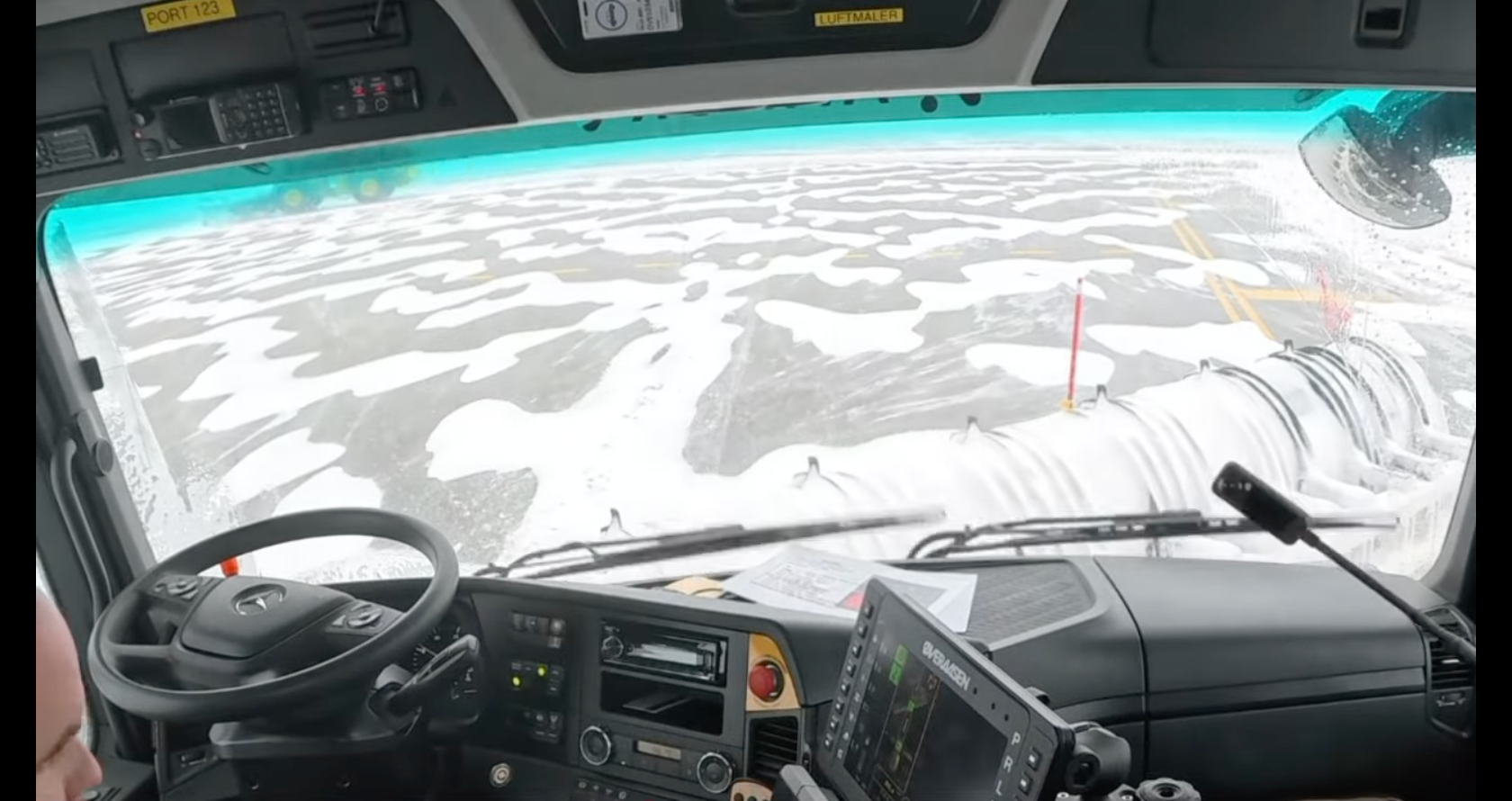
Oslo runway from a snowplow cab

The blade anchors the near field. Snow spoils the texture and edge markings that normally convey lateral position and motion.

Yeti Move

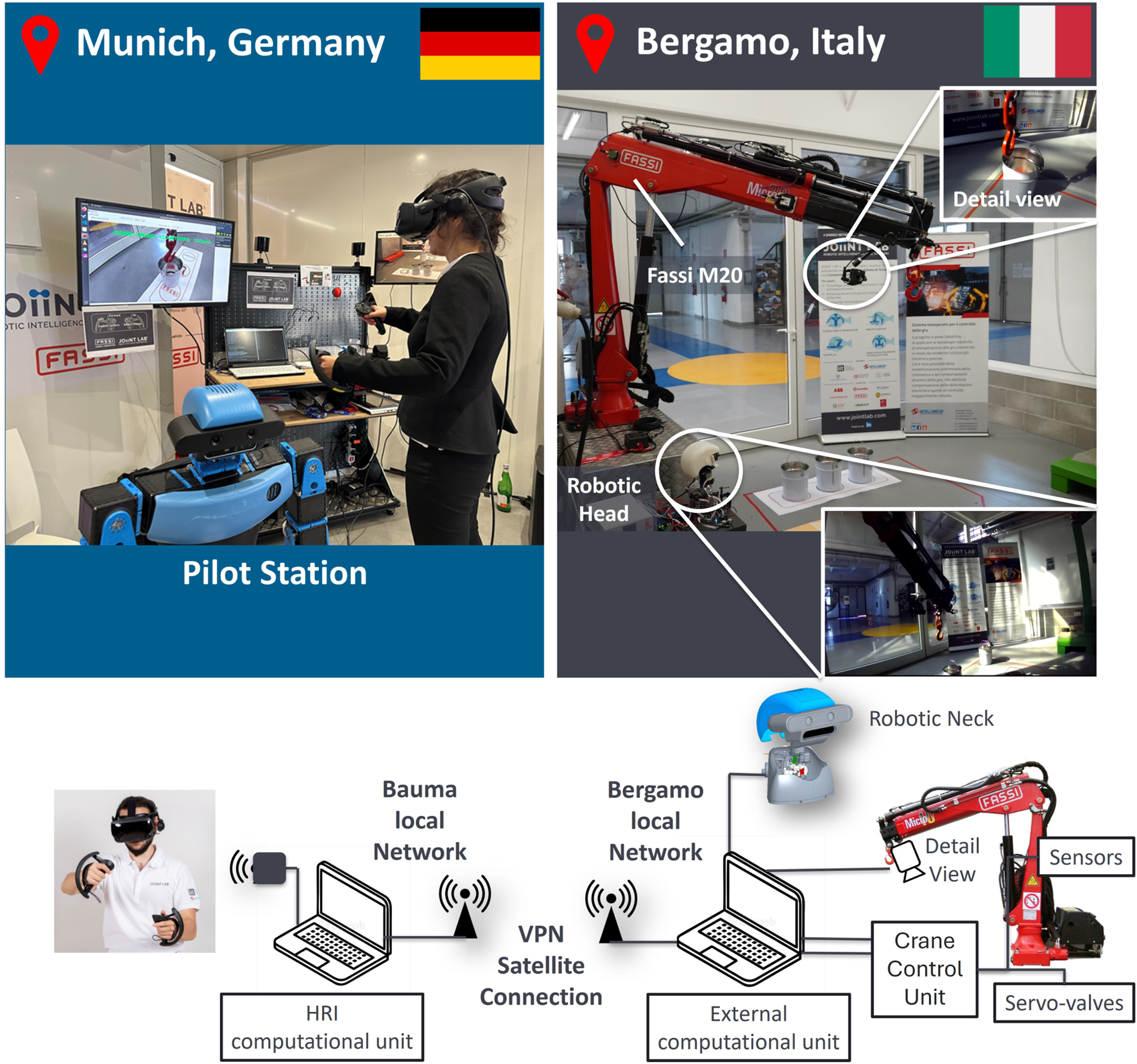
Two viewpoints on a remote lift

A broad context camera and a boom-tip camera answer different questions about obstacles and contact.

Cranebot research team, Frontiers in Robotics and AI, figure 9

How much world to draw

Start with equipment silhouette, ground transitions, relative motion and tool contact. Add detail where it helps interpret one of them.

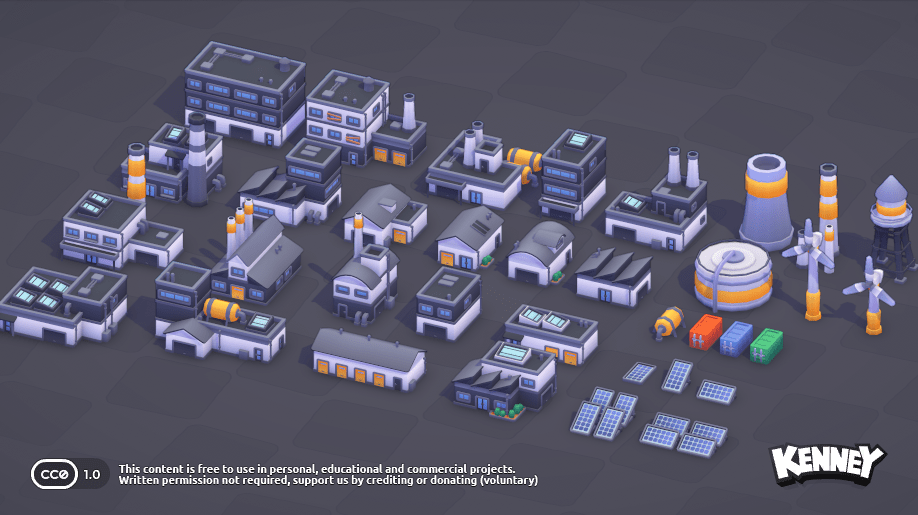
Industrial silhouettes in low-poly geometry

Silos, rooflines and large openings stay legible with modest geometry and few material changes.

Kenney, City Kit (Industrial), CC0

A colour-coded vehicle test field

A restrained test field can make discrete vehicle silhouettes, ground spacing and parking orientation easy to compare.

BeamNG.tech

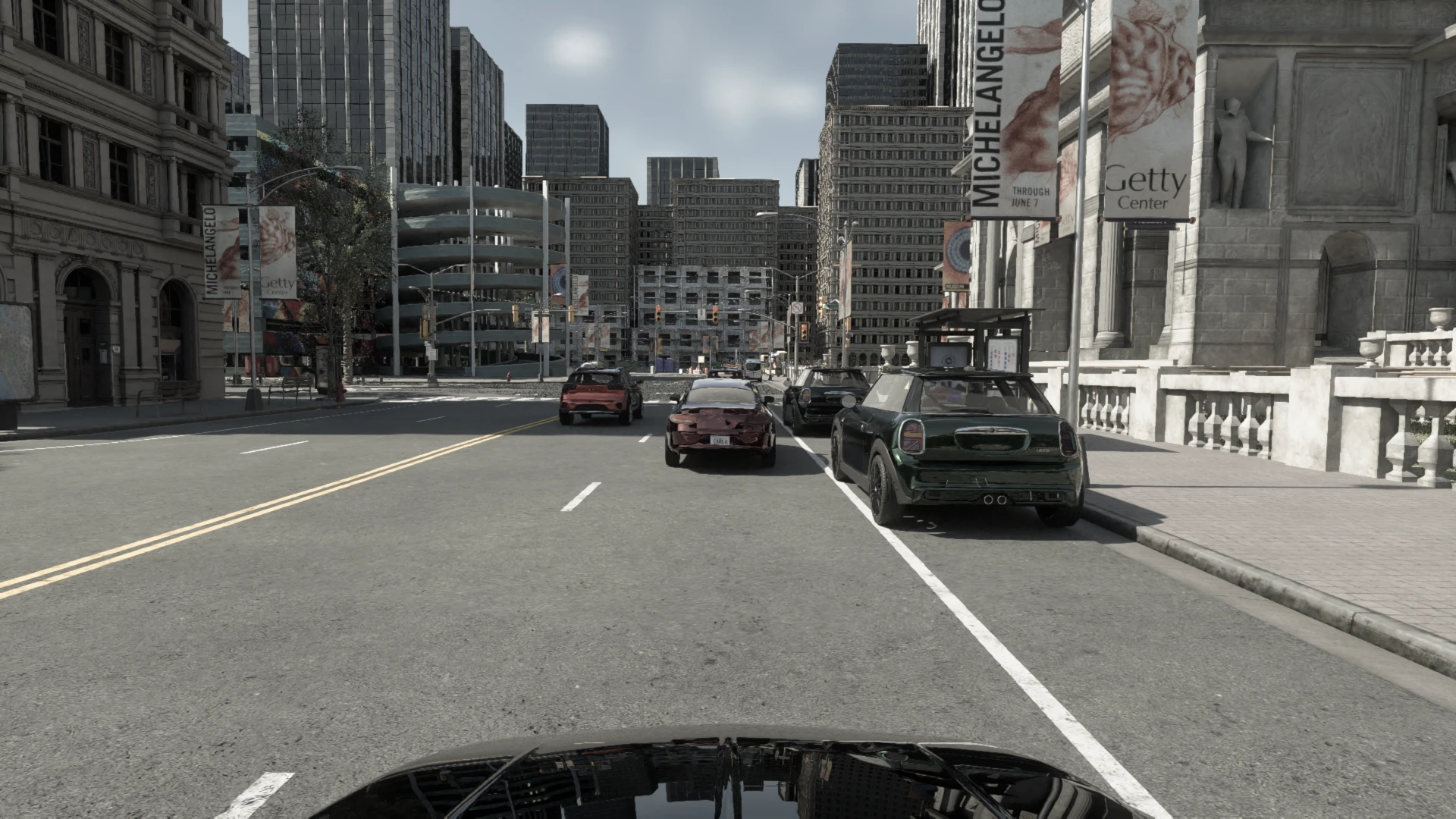
An instrumented synthetic road camera

Use this as a realism benchmark. The source holds the scene constant across alternative lens projections.

CARLA Simulator

Two worlds to prototype

Compare the treatments at the same yard coordinates through the same lens, machine geometry and weather conditions.

Faceted quarry

Muted aggregate, shaped berms, a few strong landmarks, and crisp paint where the road surface supports it.

  • Cue. shadows and material changes make the scene and equipment easier to locate.
  • Discussion. can the operator still separate the tool tip from crushed rock and shadow?

Diagrammatic yard

Pale ground planes, a visible grid and stronger contrast at work targets.

  • Cue. repeatable spacing makes clearance and motion readable.
  • Discussion. does the regular grid make speed and distance unusually easy to judge?

Use the map for overview. For manual operation, compare fixed simulated cameras with ordinary occlusion. A floating isometric camera can reveal targets or hazards a mounted sensor would miss. Use a later study to vary one cue, such as a surface grid or an optional corner projection, across both worlds. Isometric reference · Crane depth-aid study

What each frame must show

A frame label should carry its source, orientation and age. A freeze holds the last image and shows its age inside the frame.

TaskNear-field referenceWhen an alternate helps
Haul truckHood edge, lane or verge, grade breakBlind-side backing into a pad
ExcavatorBucket tip against rock and contact planeDepth from an off-axis side view
Gantry craneLoad corners, cable and height off stackDownward alignment or side clearance
SnowplowBlade ends, cleared swath and postsMissed swath or edge obstruction